Reimagining OAK311
Oakland, CA
Overview
Oakland’s OAK311 system over-represents reports from wealthier neighborhoods in the Oakland area, causing an under-capturing of infrastructure needs in historically redlined communities. Thus, creating an uneven service delivery from the City of Oakland. To attempt to bridge this issue, I evaluated OAK311’s accessibility and measured recorded infrastructure issues in DeFremery Park, Oakland, CA. This project produced a three-pronged recommendation in a memo for OakDOT, centering: equity hubs, outreach protocols, and a culture-based marketing campaign.
Project Index
GRAPHICS
01 / 06
Project Takeaways
Lessons & Principles
Data Equity is Infrastructure Equity
OAK311's over-representation of wealthier neighborhoods reveals that reporting systems themselves can reinforce spatial inequality. Cities must proactively design outreach and access protocols that center historically underserved communities, not just respond to who speaks loudest.
- Assessed OAK311's digital accessibility, language, and usage patterns through guidance from OakDOT's Chief of Staff & Race and Equity Team Lead
- Conducted field work around DeFremery Park, manually counting potholes and signage gaps in the road with a pothole survey template reported to OakDOT
Culture as Engagement Strategy
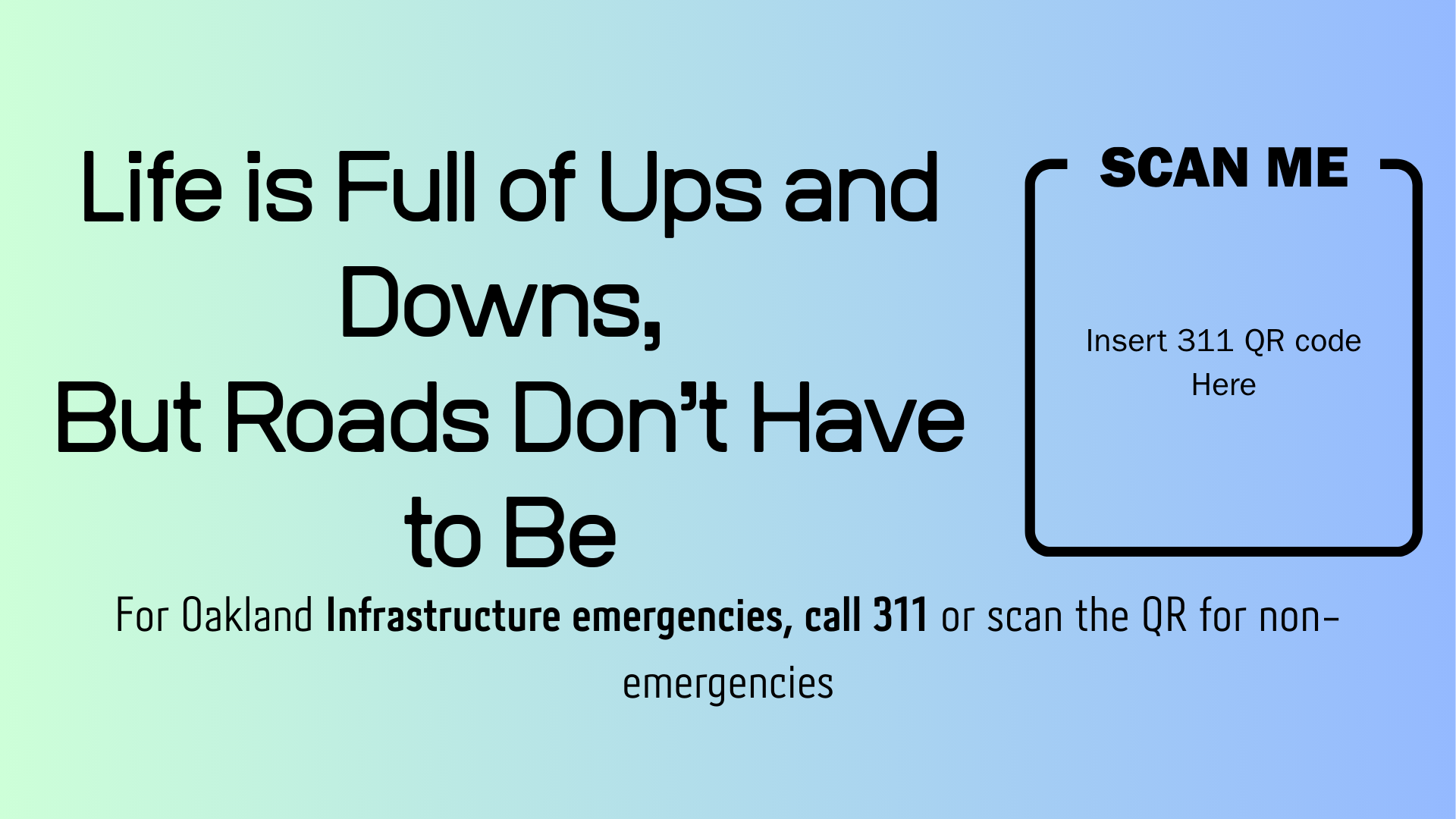
The marketing campaign showed that meeting communities where they are, through humor, local identity, and familiar channels, can dramatically increase civic participation. Technical infrastructure alone is insufficient without culturally resonant outreach.
- Developed a transit ad campaign that was adopted by OakDOT via their social media and future billboard planning
Equity Hubs as Institutional Bridges
Physical equity hubs can serve as trusted intermediaries between residents and city services, addressing both digital divides and institutional mistrust. They transform one-way reporting systems into two-way community partnerships.
- Recommended 311 paper hubs in local community centers and libraries alongside follow-up protocols, informing OakDOT's outreach planning