Marina Green Redesign
San Francisco, CA
Overview
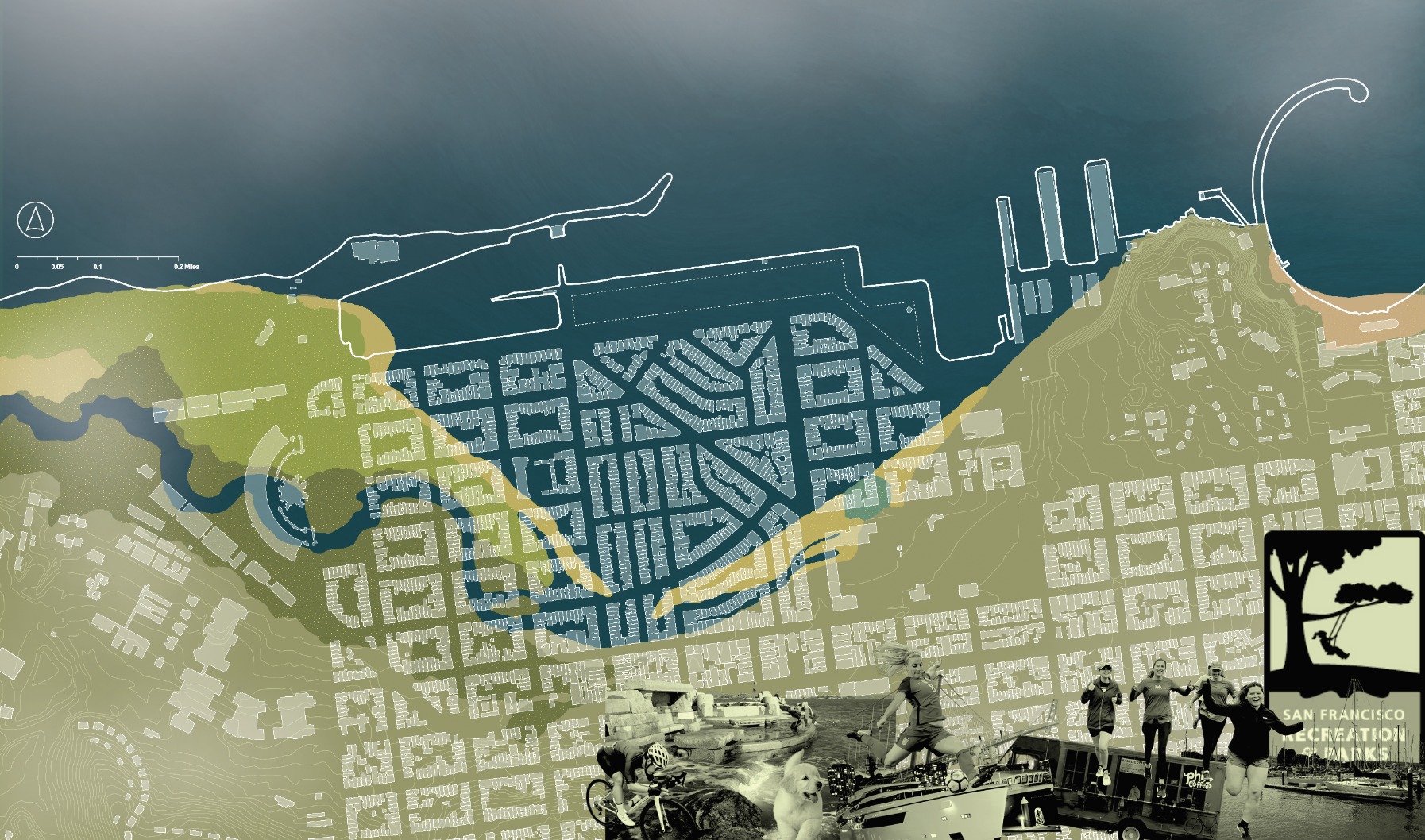
This project reimagines San Francisco’s Marina Green as a resilient, multi-functional waterfront landscape that integrates climate adaptation, contaminated-fill remediation, and community-centered programming into a coherent design framework. Framed by the Marina Improvement and Remediation Project and regional shoreline adaptation conversations, the proposal positions Marina Green as both a neighborhood park and a Bay-wide demonstration site for nature-based solutions, sea level rise education, and social gathering.
Project Index
GRAPHICS
01 / 05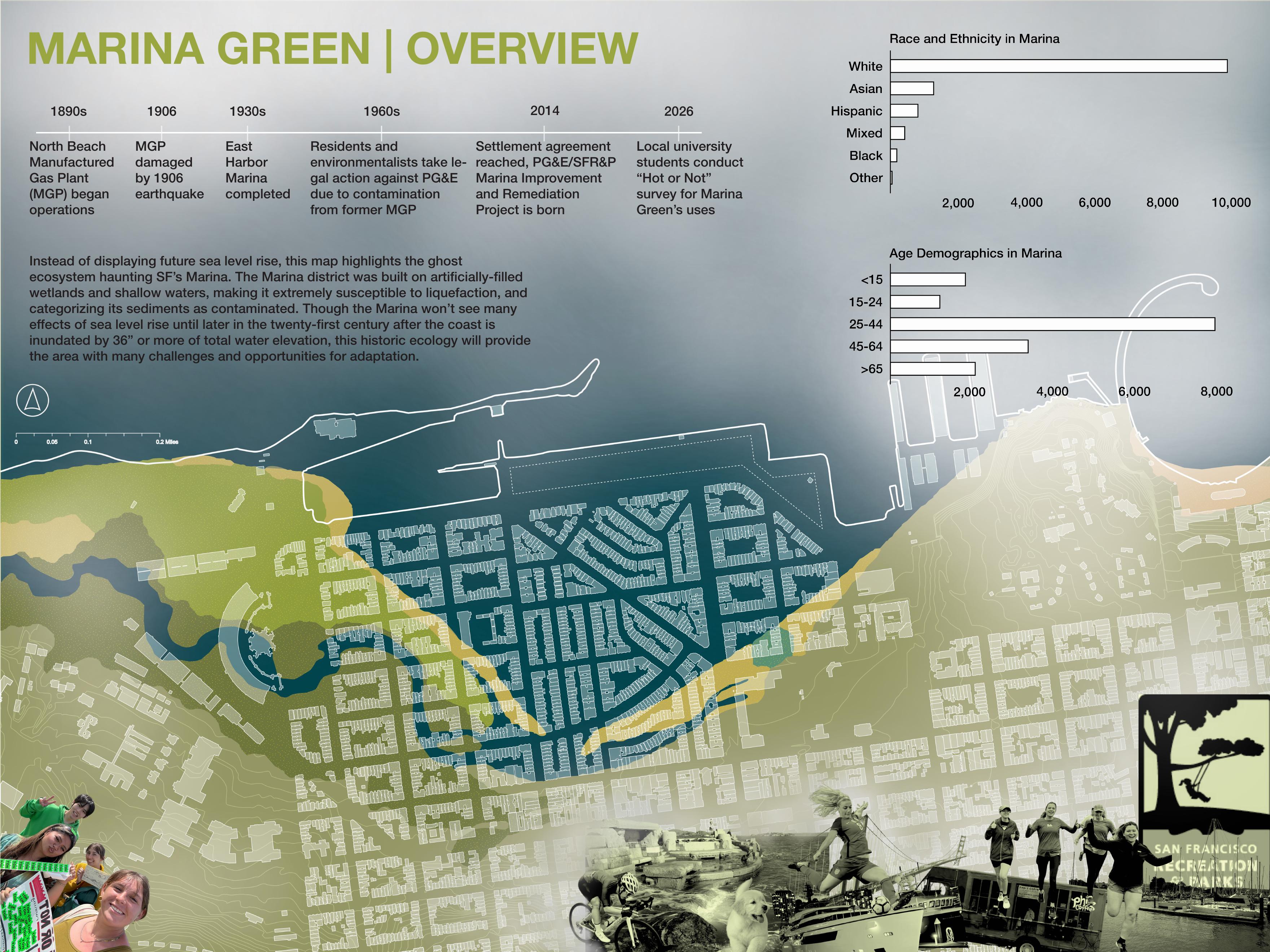
Project Takeaways
Lessons & Principles
Community Analysis as Foundation
Design decisions should be grounded not only in conceptual or formal analysis, but in direct community analysis of a space. The people who use a site every day are the primary users we serve as designers, and their patterns of access, behavior, and need must shape the design as much as any theoretical framework.
Activate Corners, Preserve the Core Pull
Activating the edges and corners of a site should complement, not compete with, the primary pull factor that draws people there. At Marina Green, the large open green space near the waterfront was the main attraction in a dense city, so the design left it mostly untouched and expanded it further. Peripheral programming was carefully placed to support and frame that central experience rather than fragment it.
Reflect Shifting City Identities
Design decisions should actively reflect current and emerging city identities. Cities are not static, and projects that respond to present-day demographics, cultural use patterns, and social needs are more likely to remain relevant and equitable over time.