Artist affordable housing model
2100 Telegraph Ave, Oakland, CA
Overview
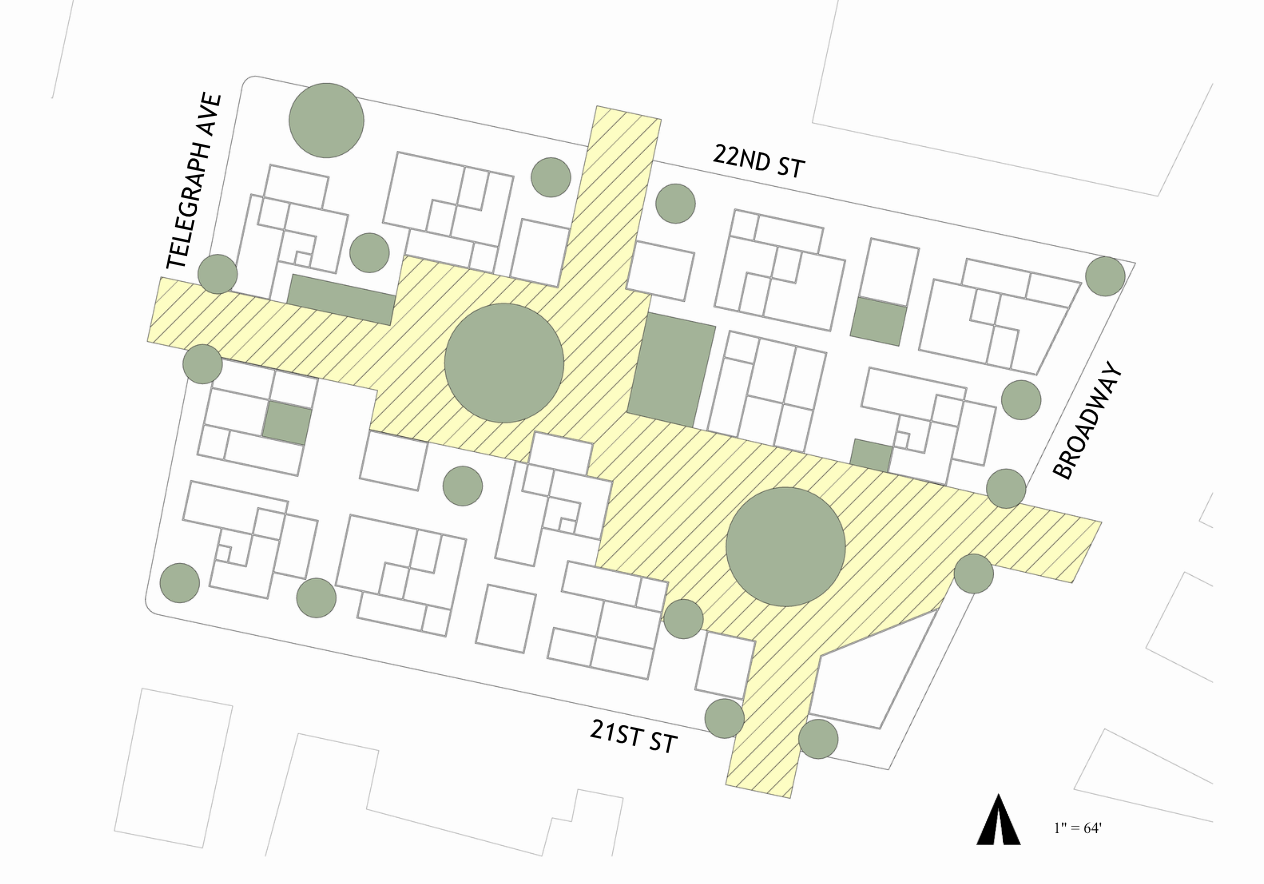
This proposal designs an affordable housing model for Oakland artists at the intersection of Telegraph, Broadway, 21st, and 22nd Streets in Uptown Oakland. Adapted from Kevin Daly Architects' Little Berkeley precedent, the project scales to 40–60 units restricted at 30–60% AMI, integrating artist studios, gallery spaces, shared dry-storage, flat-file rooms, and a dedicated gallery. The design embeds greenery, communal courtyards, and a Maudelle Miller–inspired "right to return" governance model, paired with a Westbeth-style nonprofit capital stack to anchor permanent artist housing against cycles of displacement and gentrification in Uptown Oakland.
Project Index
GRAPHICS
01 / 09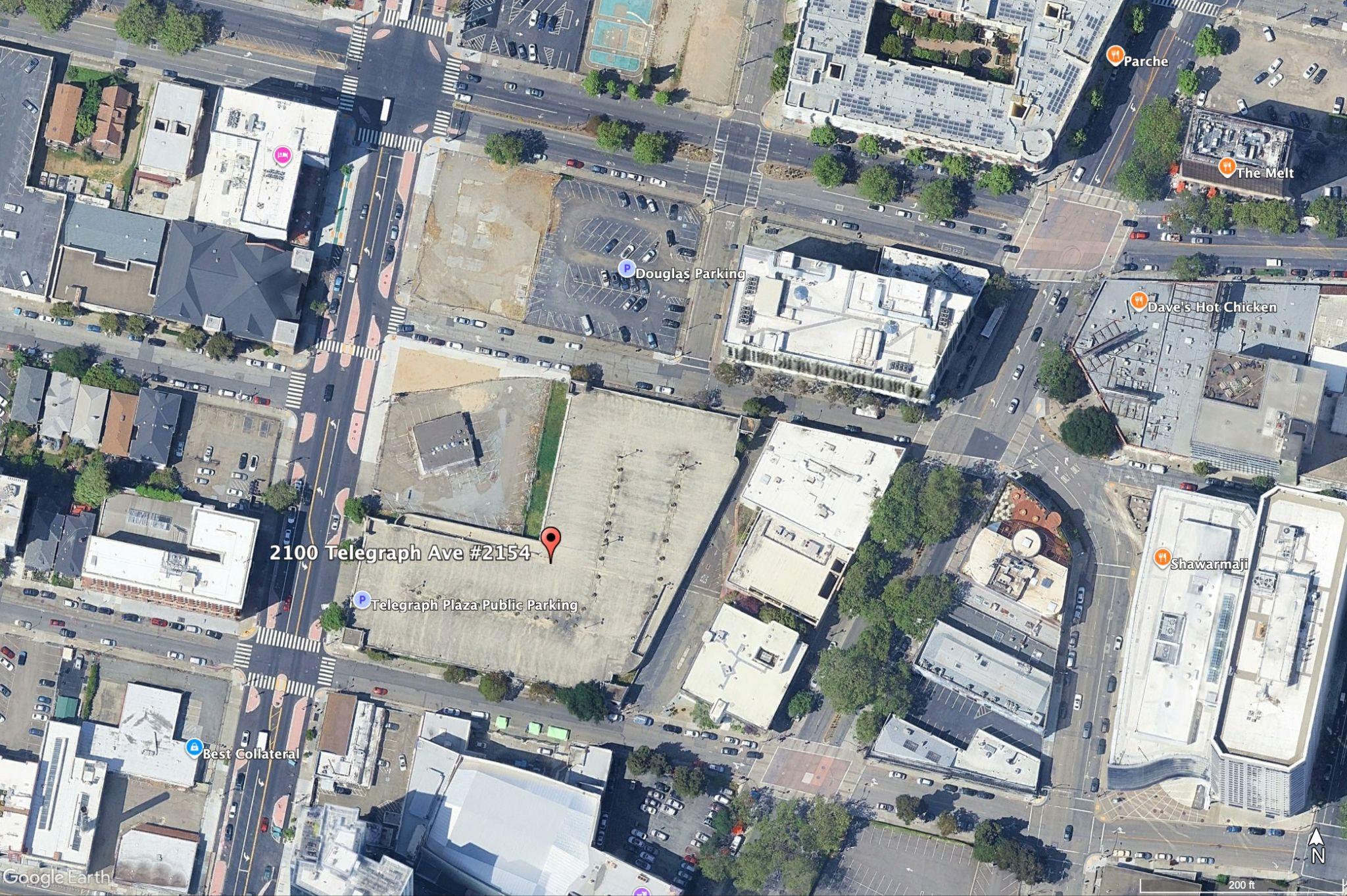
Site Context · 2100 Telegraph Ave, Uptown Oakland
Project Takeaways
Lessons & Principles
Iterative Design Through Graduate Mentorship
Working alongside master's students in urban design provided a critical feedback loop that pushed the project through multiple formal and conceptual iterations. Their experience with precedent analysis, zoning negotiations, and community-centered processes helped refine the massing, unit mix, and shared amenity program. Peer critiques during desk reviews surfaced questions about scale transitions, courtyard privacy, and the relationship between live/work units and public gallery space that would not have emerged in isolation.
- Participated in weekly desk critiques with graduate mentors to stress-test unit layouts and circulation logic
- Revised massing and facade treatment across five major iterations based on peer and instructor feedback
- Developed a clearer live/work boundary strategy after graduate mentors challenged initial studio-to-gallery adjacencies
Site Visits and Reading the Urban Fabric
Repeated site visits to Telegraph Avenue, the surrounding Uptown blocks, and nearby arts corridors revealed layers of history invisible in maps and aerials. Walking the ground plane exposed the tension between preserved Victorian commercial fabric and recent development pressure, while conversations with local business owners and observations of existing arts programming clarified what "artist community" actually means in this place. These visits grounded the design in the neighborhood's lived experience rather than abstract zoning data.
- Conducted three on-site walks to document existing building typologies, street wall conditions, and pedestrian flow patterns
- Mapped informal arts activity and vacancy patterns along 21st and 22nd Streets to identify community assets
- Referenced Oakland's historical streetcar-era commercial fabric to inform ground-floor activation and storefront rhythm
Housing Equity Through Precedent and Policy
The paper's core argument is that permanent artist affordability requires more than restricted rents: it demands a replicable capital stack, a governance model that prevents resale displacement, and spatial programming that supports cultural production. Adapting the Little Berkeley precedent meant scaling its courtyard typology and modular construction logic to Oakland's AMI thresholds, while the Westbeth-inspired nonprofit ownership model and Maudelle Miller 'right to return' governance framework aim to break cycles of speculation and displacement.
- Structured a capital stack combining 4% LIHTC, City of Oakland soft loans, Measure A1 bond funds, and arts-focused grants
- Proposed a Westbeth-style nonprofit ownership model to remove units from speculative market pressure
- Integrated green walls, native planting, and communal courtyards as equity amenities that improve environmental and social quality